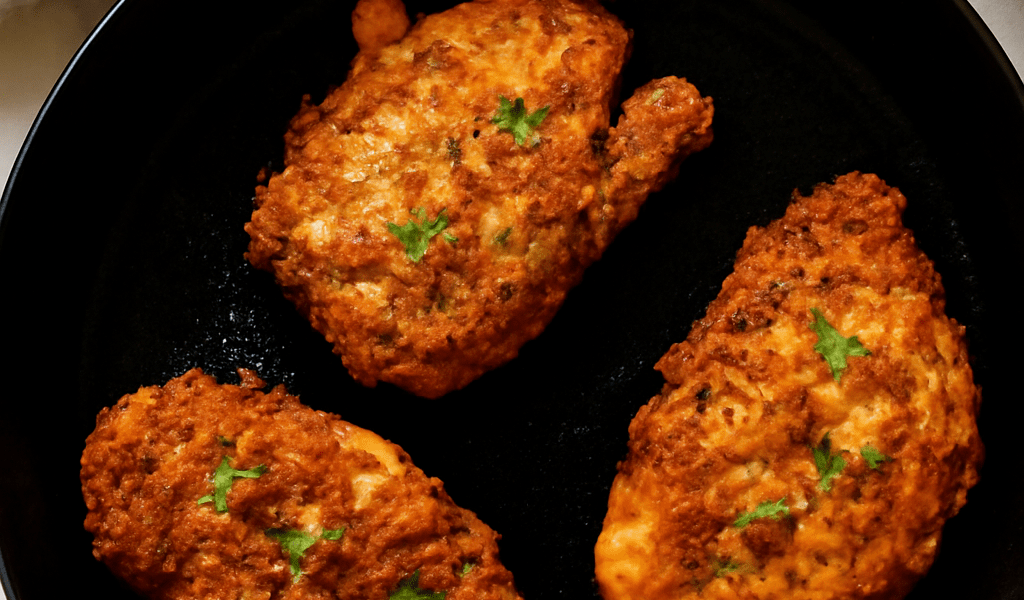
The amount of oil determines how the coating cooks: deep-frying a chicken breast surrounds it with hot oil, while a shallow skillet needs a turn halfway through. Both methods produce a crisp fried chicken breast when the pieces are evenly thick and cooked in small batches.
This recipe uses boneless, skinless pieces, so the flour coating supplies the crunch. It serves four with a salad or side dish and takes about 40 minutes, including preparation. Bone-in pieces require different cooking times; use a separate method for those rather than relying on the estimates below.
Crispy Fried Chicken Breast: Ingredients and Equipment
This deep fried chicken breast recipe makes four cutlets from two large breasts. For crispy fried chicken breast, start with evenly sized pieces. A heavy, deep pot works for immersion frying; a wide, heavy skillet works for shallow frying. For either option, use an oil thermometer, an instant-read food thermometer, tongs, and a wire rack set over a rimmed baking sheet.
- 2 boneless, skinless chicken breasts, about 1 1/2 pounds total
- 1 cup all-purpose flour
- 1/4 cup cornstarch
- 1 teaspoon kosher salt, plus a pinch for serving
- 1 teaspoon paprika
- 1/2 teaspoon garlic powder
- 1/2 teaspoon black pepper
- 1/4 teaspoon cayenne, optional
- 2 large eggs
- 2 tablespoons milk
- Neutral frying oil, such as canola or vegetable oil
- Lemon wedges and a dipping sauce, for serving
The cornstarch helps give the crust a light crunch, while paprika adds color and flavor. Leave out the cayenne for a milder plate. For deep frying, the amount of oil depends on your pot; the depth matters more than the number of cups. A skillet uses less oil, but you will need to turn each piece carefully.
Prepare the cutlets and coating
Cut each breast horizontally into two pieces. If needed, place the pieces between sheets of plastic wrap and gently pound the thick areas to about 1/2 inch. Similar thickness helps all four portions cook at roughly the same rate. Pat dry with paper towels and discard the towels.
In a shallow bowl, whisk the flour, cornstarch, salt, paprika, garlic powder, pepper, and cayenne. In a second bowl, beat the eggs with the milk. Dip each cutlet into the flour mixture, then into the egg, and finally back into the flour. Press the coating on both sides and shake off loose flour. Place the pieces on a clean plate for 5 minutes while the oil heats; this gives the coating time to adhere.
For skinless fried chicken, a double coat makes up for the absence of skin with a substantial crust. For fried skinless chicken, pressing the flour on firmly helps the crust stick. Keep one hand for wet ingredients and the other for dry ingredients if possible. Discard any leftover egg and flour mixture that touched raw chicken, and wash your hands and work surfaces before handling cooked food.
Deep-fry the cutlets
Pour oil into the deep pot to a depth of about 2 inches, keeping the pot no more than half full. Heat it to 350°F. Lower one or two cutlets gently into the oil with tongs, laying them away from you. Leave space around each piece and let the oil return to temperature between batches.
Fry for approximately 5 to 7 minutes, turning once if needed, until golden and cooked through. Lift each piece to a clean rack and check its thickest part with the food thermometer. Every cutlet must reach 165°F; if one has not, return it to the oil and check again. FoodSafety.gov lists 165°F as the safe minimum for poultry.
This deep fried chicken breast is ready to rest for a few minutes on the rack. Oil temperature will fall when cold meat enters the pot, so avoid crowding it. For this recipe for deep-fried chicken breast, the thermometer tells you when the center is done; a golden exterior alone cannot do that.
Shallow-fry in a skillet
For crispy pan fried chicken breast, pour about 1/4 inch of oil into a wide, heavy skillet and heat it to 350°F. The oil should come partway up the cutlets rather than cover them. Add one or two pieces without crowding, then fry for about 3 to 4 minutes per side. Turn gently with tongs when the underside is golden.
Transfer each piece to a clean rack and check the thickest part for 165°F. If needed, return it to the pan and cook longer, checking again. Bring the oil back to 350°F between batches. For crisp chicken breast fried in a pan, keep the oil at a steady temperature: if it smokes, lower the heat and let it cool before continuing.
Pick the approach that fits dinner
Deep-fried chicken breasts cook with more of the crust in the oil at once and require a pot with enough room above it. The pan method requires less oil but more turning. Both produce a crisp coating; the depth of the oil changes the equipment and attention required, not the food-safety target.
When comparing a restaurant order with a deep-fried chicken breast recipe at home, count the sides and sauce as well as the chicken. A prepared meal saves cleanup; cooking at home lets you divide the pieces among four plates and adjust the spice. Add coleslaw and potatoes for a larger meal, or use the cutlets in sandwiches with lettuce and pickles.
For crispy chicken breast cooked in a skillet, serve the sauce separately instead of pouring it over the coating. The same choice helps chicken breast fried in deep oil stay crunchy. Let the pieces rest uncovered on the rack, then serve promptly with lemon wedges so steam does not soften the underside.