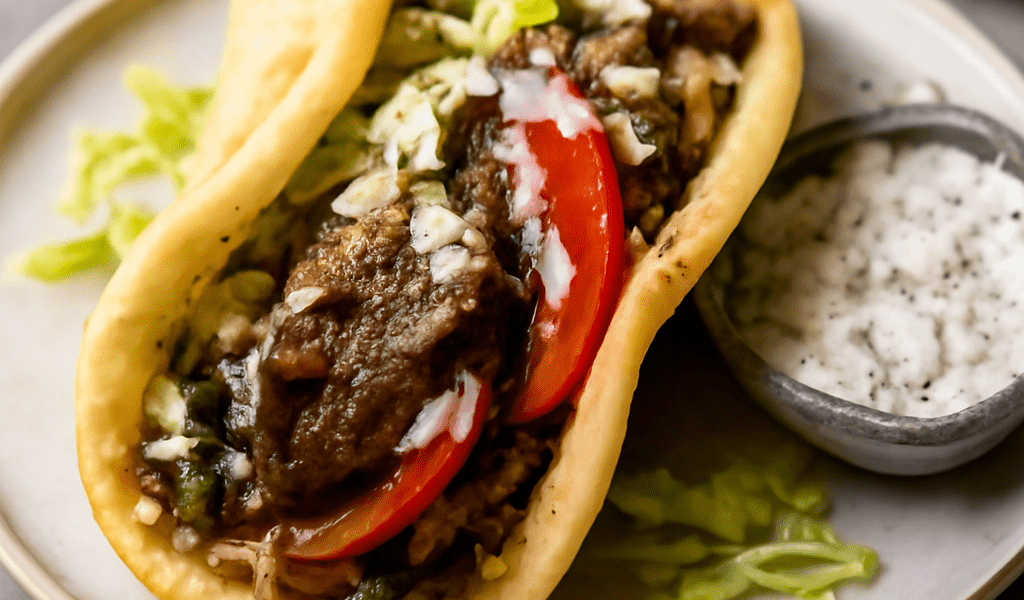
The right flatbread depends on what you plan to put inside it. A small, flexible round can hold a modest portion, while a larger one gives a generous filling room to fold. The soft round that holds everything is the bread; a gyro served in a pita is the finished meal, with meat, vegetables, and sauce inside.
Pita Gyros: Start With a Flexible Round
For a handheld gyro pita, look for a soft, pocketless Greek-style round that bends without splitting. A pocket pita can work, but opening and stuffing it makes a different shape: a filled pocket rather than a rolled sandwich. If a package says “pocketless,” you can use the whole surface to wrap around the filling.
Size matters more than a promise on the label. A round about 7 to 8 inches across is a useful starting point for one meal; a smaller round suits a lighter portion. Check the actual diameter if it is listed, since packages vary. If you can only find smaller bread, make two modest wraps instead of trying to force everything into one.
Choose gyro bread by flexibility and size. Pick up the package and look for rounds that appear intact, without dry, broken edges. At home, gently bend one before loading it. It should curve rather than crack. Pita bread that feels stiff straight from the package may soften with heat, but a brittle edge is a sign to handle it gently and keep the filling light.
Warm the bread just before filling
A warm pita for gyros bends more easily and tastes fresher. Set a skillet over medium heat, then place one round in the dry pan. Warm it briefly on each side, checking as you go; the goal is a supple surface, not a crisp shell. If the bread seems dry, lightly dampen its surface first. Heating times vary with thickness and the pan, so test the bend instead of relying on a timer.
For several servings, warm the rounds one at a time and stack them under a clean towel. Avoid leaving a round on high heat: toasted spots can taste good, but a stiff rim makes folding harder.
You can also use a microwave for a single serving. Put the bread on a microwave-safe plate, cover it with a barely damp paper towel, and heat in short bursts. Fold while it is warm. If it becomes tough as it cools, rewarm briefly rather than adding more filling to disguise the problem.
Portion the filling before you roll
Think of gyro pita bread as the container, not an unlimited plate. For a 7- to 8-inch round, start with roughly 3 ounces of cooked sliced meat, a small handful of vegetables, and 1 to 2 tablespoons of sauce. These are starting amounts, not a rule: thickness and flexibility vary. The test is whether the sides can meet without squeezing food out.
Keep hot ingredients and cold toppings separate until assembly. If you are using leftover cooked meat, reheat it to 165°F, checking with a food thermometer as recommended by the USDA. Slice or arrange larger pieces so they do not poke through the bread. Pat very wet tomatoes or cucumbers dry, and use a spoon to control the sauce.
For pita gyros at home, lay the meat in a narrow strip just off the center of the warm round. Add vegetables along that strip, then distribute sauce in a thin line. A long pile is easier to contain than a mound in the middle. Leave an inch or so at the lower edge and enough bare bread on both sides to overlap.
Fold for eating, not just for the plate
Bring the bottom edge up over the end of the filling. Fold one side across, hold it in place, and bring the other side over it. You should have an open top and a closed bottom. The bread around the filling should meet without force. The wrap needs a pliable round that does not have to stretch. If the edges will not overlap, remove a little filling and try again; pulling harder can tear the bread.
A sheet of parchment or foil makes the wrap easier to hold. Place it underneath before folding, then wrap the paper snugly around the lower half. Peel it down as you eat. For a takeout-style meal, keep extra sauce in a small separate container and add it as needed. This prevents a soggy bottom.
When making pita gyros for a group, set out the components separately and let each person build a manageable portion. Warm a few rounds at a time rather than the whole stack at once. Put extra meat on the plate.
Compare cost and convenience
Buying a package can be economical when you are feeding several people, especially if you already have meat and vegetables. Divide the package price by the number of usable rounds, then add the cost of the filling and sauce. Compare that total with a prepared wrap, accounting for the time and cleanup you save when ordering out.
If the package has more rounds than you need, check its storage directions. Freezing suitable bread in a well-sealed bag can make the remaining portions useful later. Separate rounds before freezing and warm after thawing.
The most likely failure is overfilling: the sides stop overlapping, sauce runs toward the bottom, or the bread begins to split as you lift it. Set the wrap down, remove a few spoonfuls to the plate, and refold. If the bread for the gyro itself cracks even with a modest portion, warm it briefly again or use a fresh, more flexible round.