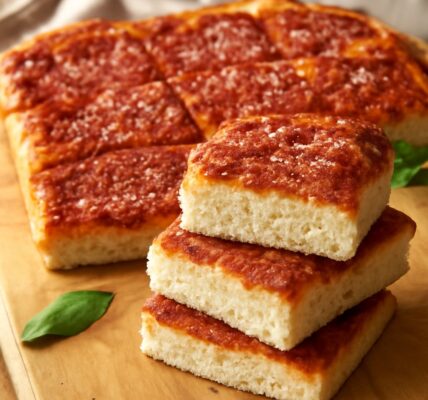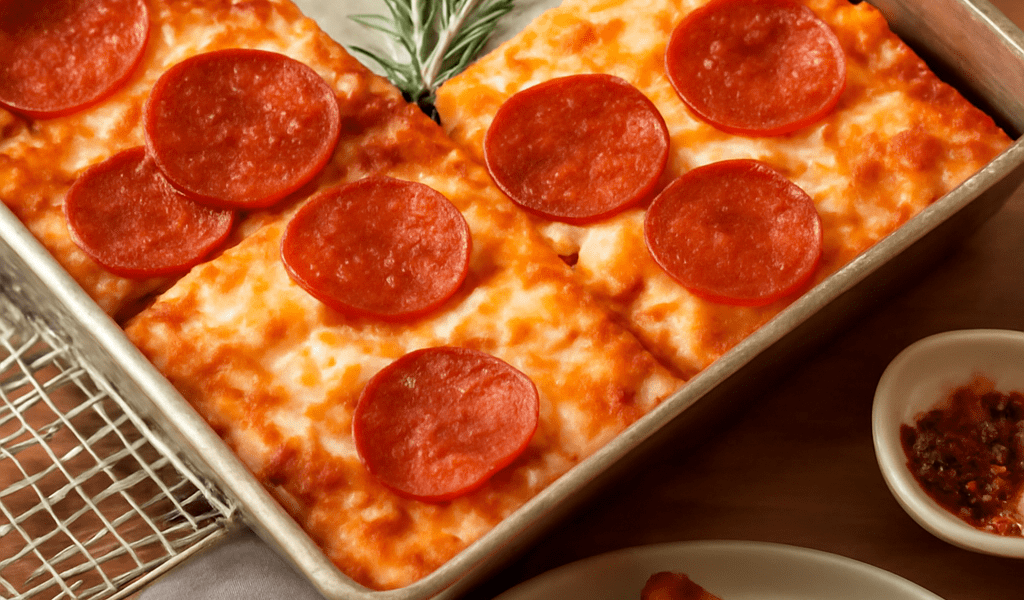
A pan of soft, rectangular slices with tomato sauce and a blanket of melted cheese is easy to share at lunch. This school-style pizza brings that familiar shape to your kitchen with a simple dough, a modest amount of sauce, and a quick bake.
For a cafeteria-style pizza at home, spread the toppings evenly and cut the finished pan into tidy rectangles. The recipe makes 12 pieces: enough for six people to have two slices each, with a salad or fruit on the side.
What Makes the Rectangle Work?
Cafeteria pizza is appealing for its balance. A soft, fairly even base supports a thin layer of tomato sauce, while low-moisture mozzarella melts into a cohesive top. A little browning at the edges adds flavor while the middle stays tender.
School lunch pizza can be plain cheese or have a light scattering of cooked toppings. Keeping the layer modest makes the slices easier to lift and helps the base bake through. For these school lunch-inspired slices, use a standard 13-by-18-inch rimmed baking sheet; measure the inside of yours, since smaller pans produce a thicker crust and may need more baking time.
Cafeteria Pizza: A Home Recipe
For the dough
- 3 cups all-purpose flour, about 360 grams, plus a little for handling
- 2 1/4 teaspoons instant yeast, one standard packet
- 1 teaspoon sugar
- 1 teaspoon fine salt
- 1 cup warm water, plus 1 to 2 tablespoons if needed
- 2 tablespoons olive oil, plus 1 teaspoon for the pan
For the topping
- 3/4 cup thick pizza sauce
- 2 cups shredded low-moisture mozzarella, about 8 ounces
- 1/4 teaspoon dried oregano
- 1/4 cup finely diced cooked bell pepper or cooked sausage, optional
- Combine the flour, yeast, sugar, and salt in a large bowl. Add the warm water and 2 tablespoons oil. Stir until a rough dough forms, adding a little extra water if dry flour remains.
- Knead on a lightly floured counter for 6 to 8 minutes, until smooth and elastic. Put the dough in a lightly oiled bowl, cover, and let rise in a warm place for 45 to 60 minutes, until roughly doubled.
- Oil the baking sheet with the remaining teaspoon of oil. Gently press the dough toward the corners. If it springs back, cover it and wait 10 minutes, then stretch again. Let it rest on the pan for 15 minutes while the oven heats to 425°F.
- Bake the untopped base for 7 to 9 minutes, until the surface looks set but has little color. Remove the pan and spread the sauce across the base, leaving a narrow border. Sprinkle on the mozzarella, oregano, and optional topping.
- Bake for another 10 to 14 minutes, until the cheese is melted, the edges are golden, and the underside is browned. Lift a corner with a spatula to check. If the bottom is pale, give it a few more minutes, watching the top.
- Let the pan rest for 5 minutes. Transfer the pizza to a board if practical, then cut it into three columns and four rows for 12 rectangles.
School lunch pizza benefits from a short rest: the cheese settles, and a spatula can slide under each piece without pulling the topping off. Serve two rectangles per person for a light meal, or cut smaller pieces for a snack table.
Adjust the Base, Sauce, and Cheese
For a school lunch-inspired pizza, aim for dough that is soft and slightly tacky. Flour absorbs water differently, so add the final spoonfuls gradually. Add flour sparingly to keep the base tender.
For a thicker school-style pizza, use a 10-by-15-inch pan and check that the center and underside are baked before serving. A larger pan gives these lunchroom slices a thinner base. Spread the dough evenly so it bakes at the same pace.
Use a sauce thick enough to spread without pooling. If yours is watery, simmer it briefly until it thickens, then cool it before spreading. A light coat keeps these cafeteria-inspired slices firm. Serve extra warm sauce on the side.
For an even melt on this cafeteria-inspired bake, distribute the shredded cheese to the edges of the sauce. Low-moisture mozzarella is convenient and mild. You can replace a small handful with provolone for a sharper flavor, or sprinkle Parmesan over the top after baking. A thick layer can slide when lifted.
Names, Toppings, and Serving Choices
You may encounter the term commodity pizza in discussions of school meals. It concerns ingredient sourcing, rather than a single recipe or crust style. USDA Foods makes foods available for state agencies to order for schools, including cheese among other products. Pizza made with USDA commodity foods can vary according to the ingredients and preparation chosen locally.
Separately, the USDA Food Buying Guide lists cheese or meat pizzas as examples of products eligible for a Child Nutrition label, which describes their contribution to meal requirements. The label alone does not say whether commodity ingredients were used in the pizza. This home recipe uses store-bought ingredients and does not reproduce a particular school product. For a meat topping, distribute a small amount of cooked sausage across the pan and drain it first to limit moisture.
A school-style pizza with vegetables works best when the pieces are small and cooked first. Try peppers or mushrooms, cooled and drained. For cafeteria-style pizza with a little kick, offer red pepper flakes at the table rather than seasoning the whole pan. Each person can season cafeteria pizza to taste.
If time is short, use a pound of prepared pizza dough and let it relax before stretching. Follow the same topping amounts, then judge baking by the browned underside and melted cheese. For cafeteria-style pizza, divide the pan between plain and lightly topped halves.
Let school lunch pizza stand for 5 minutes, then use a long knife or pizza wheel to cut 12 rectangles. For a group, arrange the school-style pizza pieces in a single layer on a platter and pass them while warm, with extra sauce and napkins alongside.