A calzone is usually a folded, sealed pocket; a stromboli is generally a filled roll sliced into portions. That difference in shape also changes how the filling is distributed and how easy each is to share.
Both wrap pizza-style ingredients in dough, but the comparison between calzone and stromboli becomes more useful when you look at the filling, sauce, and portion on the particular menu. A single pocket may be a meal for one, while a sliced roll can be shared if it is large enough.
What’s the Difference Between Calzone and Stromboli on the Plate?
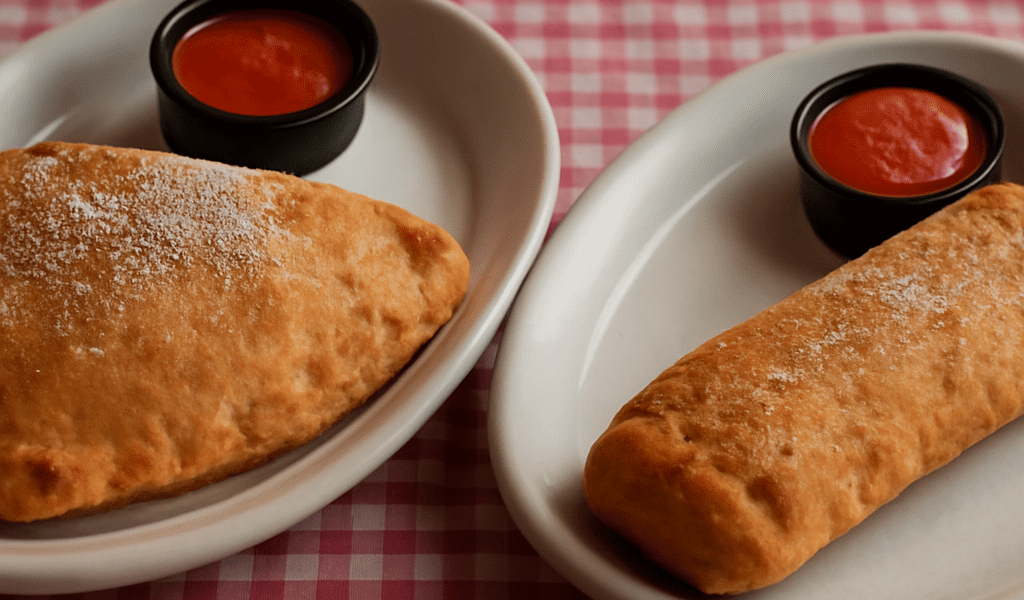
What’s the difference between a stromboli and a calzone? The first is generally made by spreading ingredients over a rectangle of dough, rolling it into a log, and sealing the seam and ends. The second starts with a round of dough folded over its filling; the curved edge is pressed or crimped closed. Food Network describes these common forms and their fillings.
What’s the difference between calzone and stromboli when they arrive? Cut across a roll and you may see layers of dough and filling in each slice. Cut into a folded pocket and the filling sits in a central compartment. Both should be served hot, and steam can escape when the dough is opened, so give the center a moment to cool.
The calzone vs stromboli difference is most visible in that fold or roll. Restaurants may shape either dish differently, though, so use the menu description and a photo when available rather than judging solely by the name.
Dough, Filling, and Texture
Compare stromboli with calzone beyond the shape: both commonly use a yeast-raised pizza or bread dough. A calzone often has a thicker folded edge and a soft, cheese-filled center. Ricotta and mozzarella are common, sometimes joined by vegetables or meat. A stromboli often layers mozzarella or another melting cheese with sliced meats and vegetables before rolling.
The difference between stromboli and calzone fillings is a tendency, not a fixed ingredient list. A restaurant may leave out ricotta, use different cheeses, or offer vegetarian versions of either. If ricotta is the reason you want a calzone, check that it appears in the description; a menu listing only mozzarella will give you a different texture.
The contrast between a calzone and a stromboli is also a matter of distribution. A pocket concentrates filling inside one large fold. A roll spreads it in layers, so a slice can include dough, cheese, and meat or vegetables together. The outside can be crisp or soft depending on the dough and how it is baked; the name alone does not settle that question.
For a lighter-tasting order, look for vegetables and a modest amount of cheese. For a richer one, choose a combination of cheeses or cured meats. Size and preparation matter as much as the item name, so compare the listed ingredients before treating one as the smaller meal.
Where Does the Sauce Go?
A calzone is often served with marinara on the side, letting you dip each bite or spoon sauce over a cut section. A stromboli may have sauce rolled inside, be served with a dipping cup, or both. The amount and placement vary by restaurant; the sauce is not a reliable test on its own.
When comparing a stromboli with a calzone for takeout, ask whether sauce travels separately. A separate cup lets you control how much reaches the crust and can help keep it from softening during the trip. If you prefer a saucy center, check the filling description rather than assuming the roll contains tomato sauce.
Some menus offer extra dipping sauce for an added charge. Include that charge when comparing prices, and check whether the listed sauce is marinara, a cream sauce, or another option. If sharing, one small cup may not be enough for everyone; ask about its size before adding extras.
Portions, Price, and Ordering
The practical distinction between calzones and stromboli can be the way a restaurant portions them. A calzone may come as one substantial pocket, while a stromboli may be a long roll cut into several pieces. Neither label guarantees a particular weight or number of servings. Look for dimensions, slice count, or a stated serving size.
To compare value, divide the total price, including any sauce or desired add-ons, by the number of people who will actually eat it. For example, a $20 roll shared by four costs $5 per person before tax and other charges. A $14 pocket split by two costs $7 each on the same basis. These are examples, not menu prices, and the portions may differ in size.
A menu comparison of calzone versus stromboli should also account for sides. If one order includes a salad and the other does not, consider whether you would buy the salad separately. For delivery, check the delivered total rather than the menu price alone; fees and promotions can change the comparison.
If you want one contained portion with a soft cheese center, choose a calzone whose menu lists the filling you like. If you want slices to pass around, choose a stromboli with a stated size or serving count that fits your group. Ask where the sauce comes when that detail will affect the meal.