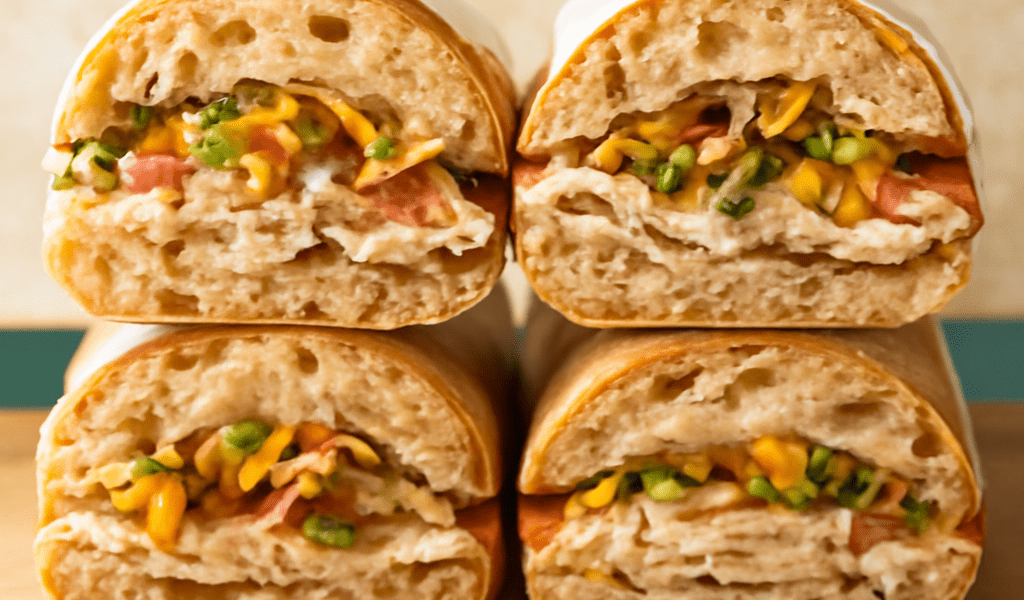
Split a long roll, layer it with turkey, provolone, lettuce, and tomato, and you have a substantial cold sandwich ready in minutes. A sub made at home lets you choose the amount of filling and keep the dressing separate until you are ready to eat.
This easy recipe for a sub sandwich makes two portions. Use a roll sturdy enough to hold the layers, then place moist ingredients between drier ones to keep the bread pleasant to bite.
Sub Sandwich Recipe for Two
Allow about 15 minutes. The amounts below make one 12-inch sandwich cut into two 6-inch portions. Choose refrigerated deli turkey and keep it cold until assembly.
- 1 soft but sturdy 12-inch sub roll
- 6 ounces sliced deli turkey
- 3 ounces sliced provolone
- 1 cup shredded lettuce
- 1 medium tomato, thinly sliced
- 1/4 small red onion, thinly sliced
- 2 tablespoons mayonnaise
- 1 teaspoon mustard
- 1 teaspoon red wine vinegar
- Black pepper, to taste
- Prepare the vegetables. Wash the lettuce and tomato, then dry them well. Slice the tomato and onion thinly so the filling is easy to bite through.
- Open the roll. Slice it lengthwise, leaving a hinge if the bread allows. Mix the mayonnaise and mustard, then spread a thin layer on the cut sides.
- Build the base. Lay the provolone on the bottom half, followed by the turkey. Fold the slices loosely rather than compressing them into one dense stack.
- Add crunch. Place lettuce, tomato, and onion over the meat. Sprinkle the vinegar and a little black pepper over the vegetables, keeping the liquid away from the bread as much as possible.
- Close and portion. Press gently, close the roll, and cut it across the middle. Serve immediately or wrap and refrigerate for later.
The best sub sandwich recipes balance bread, filling, and moisture. This combination gives each person about 3 ounces of turkey and 1 1/2 ounces of cheese; add fruit, chips, or a salad if you want a larger meal. For a vegetarian version, replace the turkey with hummus and sliced roasted peppers, and choose cheese made with vegetarian enzymes if needed.
Choose a Roll That Holds Together
For a homemade sub, a good roll has a tender interior and enough crust to contain the filling without tearing. A very soft roll is easy to bite but can absorb dressing quickly; a firmer one travels better but may push the filling out if it is difficult to bite. Choose a roll about as wide as your hand, with room to close around the ingredients.
If you are learning how to make a sub sandwich, avoid cutting all the way through the bread when possible. A hinge helps hold the layers in place. If your roll is especially thick, remove a little of the soft interior to make room for filling, but leave enough bread to support it.
Homemade sub sandwiches can be made on individual rolls instead of one long loaf. For subs made at home, divide the ingredients between two rolls and adjust the quantities if they are smaller. Check the label or bakery display for size; a “large” roll can mean different things at different shops.
Layer Filling and Dressing
For this turkey sub recipe, put cheese or lettuce against the bread before adding tomato. Those layers give the wet slices less direct contact with the crumb. Dry lettuce thoroughly and use a restrained amount of vinegar. If you like a heavily dressed sandwich, pack the extra dressing separately and add it just before eating.
To build a sub sandwich at home with a balanced bite, distribute the turkey along the full length of the roll instead of piling it in the middle. Thin onion slices add sharpness; use fewer or soak them briefly in cold water and drain for a gentler flavor. Cut thick tomato slices in half if they are likely to slide out.
A homemade sub sandwich also gives you control over sauces. Mustard adds tang, mayonnaise adds richness, and oil and vinegar make a sharper dressing. Choose one combination and start with a thin layer. You can add more after the first bite, while excess sauce is difficult to remove once the bread absorbs it.
Change the Filling and Compare Cost
This sub sandwich recipe can use ham and Swiss, roast beef and cheddar, or hummus and crunchy vegetables. Keep the same general proportions, then adjust salt and sauce to suit the filling. If buying meat and cheese for several meals, count only the amount used when comparing its cost with a prepared order.
For example, if the ingredients used cost $8 and make two portions, the food cost is $4 per portion. Compare that with the price of a similarly sized purchased sandwich, including any side or delivery charge you would actually pay. Prices and portion sizes vary, so use your own receipt for the calculation.
The best recipes for sub sandwiches use ingredients you enjoy in proportions that fit the roll. In a great recipe for a sub sandwich, dry vegetables after washing for crispness. For a richer version, add cheese or a creamy spread, leaving room to close the bread.
Pack and Store
Wrap each portion tightly and refrigerate it at 40°F or below. For a packed lunch, use an insulated bag with a cold source. FoodSafety.gov advises refrigerating perishable food within two hours, or within one hour if it is exposed to temperatures above 90°F. If the sandwich will sit longer without safe cooling, choose a different meal.
To assemble a sub at home for the next day, pack tomato and dressing separately and add them just before eating. Opened deli meat is generally kept refrigerated for three to five days, according to the cold storage chart; use it sooner if its package directs you to do so.
If the bread is soggy, look for undrained vegetables or dressing against the roll. Next time, dry the produce, use a cheese barrier, and carry extra sauce separately. If filling slips out with each bite, slice the vegetables thinner and use a smaller stack so the roll can close comfortably.