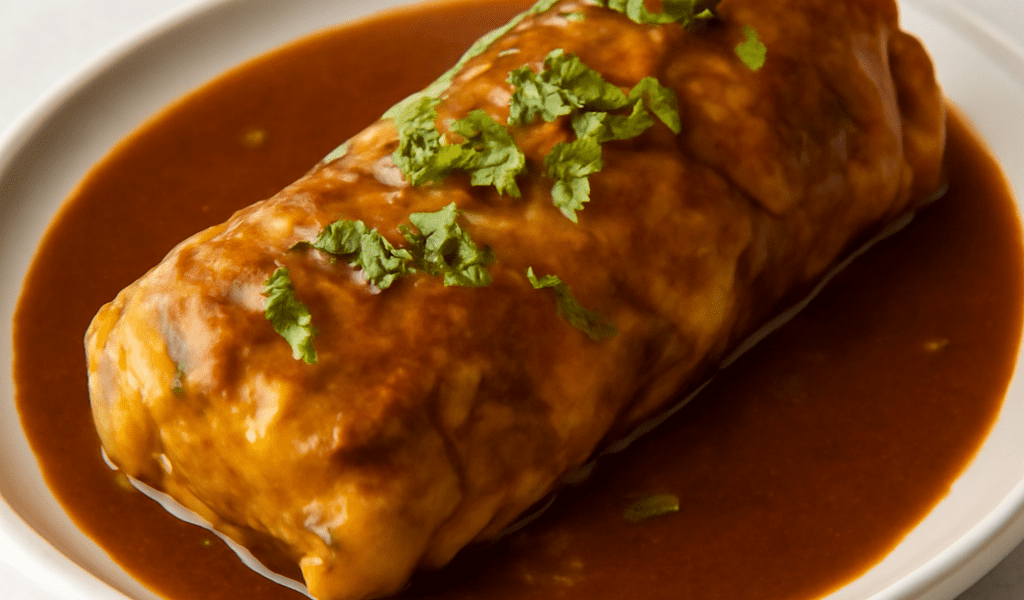
A burrito covered with warm sauce and often melted cheese arrives ready to eat with a fork and knife. The tortilla still wraps a filling, but the sauce on the outside turns it into a plated meal rather than a handheld one.
A smothered burrito can contain beef, chicken, beans or other fillings, and the sauce may be red or green. The exact combination varies by kitchen, so the menu description is the best guide to what will arrive on your plate.
What Is a Wet Burrito?
What is a wet burrito in practical terms? It is a filled flour tortilla served under a generous layer of sauce. Cheese is often melted over the top, and the plate may include rice, beans, lettuce or sour cream. The sauce softens the outside of the tortilla, making utensils useful.
A burrito described as smothered is defined by its sauce-covered serving style. A wrapped burrito with salsa inside may remain easy to hold, while one covered in sauce is generally served on a plate. A menu might call the latter “smothered” or use another name; check the description if the sauce and presentation matter to you.
The sauce-covered burrito is a plated tortilla meal; its filling and accompaniments can make it substantial. Before ordering, look for the protein, beans and other contents inside the tortilla, then check which sides are included. That tells you more about the meal than the word “wet” alone.
What Goes Inside?
Common fillings include seasoned ground beef, shredded beef or chicken, refried or whole beans, rice and cheese. A meatless sauce-covered burrito might use beans and vegetables. The proportions vary: one kitchen may fill the tortilla mainly with meat and beans, while another includes rice as well.
Ask whether rice and beans are inside the wrap, served alongside it, or both. If you prefer a particular texture, that distinction matters: rice in the filling softens under the warm sauce, whereas a side portion remains separate. A burrito topped with sauce may also have lettuce, tomatoes or onions added after heating for a fresh contrast.
What is a wet burrito if you want a vegetarian meal? Look for a filling described with beans or vegetables, and check whether the sauce and beans contain meat or meat stock. Cheese and sour cream may also be included, so ask about those if you need a dairy-free choice.
For a simpler plate, choose one filling and add toppings separately where available. For a richer meal, a combination of meat, beans and melted cheese gives several textures in the same cut. Neither combination is required by the name; the menu determines the options.
How the Sauce Changes the Meal
Wet burrito sauce is spooned over the wrapped tortilla rather than mixed exclusively into the filling. Red sauces often have a tomato or red-chile base; green sauces may feature tomatillos or green chiles. Their heat and seasoning depend on the recipe, so color alone is not a dependable spice scale.
The sauce served over a smothered burrito can be smooth and pourable or thicker and more substantial. A generous coating softens the tortilla as the dish sits. If you want to control the amount, ask whether some of the sauce can come on the side; you can spoon it over each bite at the table.
Melted cheese is often added after the sauce, then heated until it softens. Cool toppings such as lettuce, diced tomato or sour cream may be added afterward. That order gives the plate a mix of warm sauce and fresh textures, though individual kitchens assemble their dishes differently.
If making a smothered burrito at home, warm the prepared sauce separately and spoon it over the filled tortilla just before serving. Start with enough to coat the top and add more at the table. A thick sauce stays more concentrated on the tortilla; a thinner one spreads across the plate and is easy to scoop up with rice or beans.
How Does It Differ From Other Burritos?
A conventional wrapped burrito may contain similar meat, beans and cheese but is commonly served dry enough to pick up. A smothered burrito is a filled wrap with sauce added outside, so it usually calls for a plate and utensils. The fillings alone do not tell you which presentation you will get.
A chile Colorado beef burrito may use beef simmered in red chile sauce as its filling. A sauce-covered burrito can contain that filling; its defining feature is the sauce on the outside of the wrapped tortilla. Likewise, a burrito served with green sauce can be smothered, while a green-chile filling inside a handheld wrap does not automatically make it so.
If comparing menu items, ask whether cheese is melted over the sauce and whether toppings or sides are included. Those details affect how rich and filling the finished plate feels. They can also explain a difference in price between a handheld wrap and a plated meal, though prices depend on the establishment.
Ordering for Dine-In or Takeout
For dining in, choose a sauce and filling that sound appealing together: a red-chile sauce can add depth to beef or beans, while a green sauce may bring a brighter flavor to chicken. Ask about heat if the description does not say, especially when a table is sharing.
For takeout, sauce packed separately can help the tortilla hold its texture on the trip. Check whether the restaurant can separate it, then add it after unpacking. If everything comes together, expect a softer wrap and use a plate; the sauce is part of the intended presentation.
To decide which sauced burrito to order, first choose the filling, then check the sauce color, heat and included sides. If you want a firmer tortilla, request sauce on the side; if you want the full soft, smothered plate, have it served over the top.