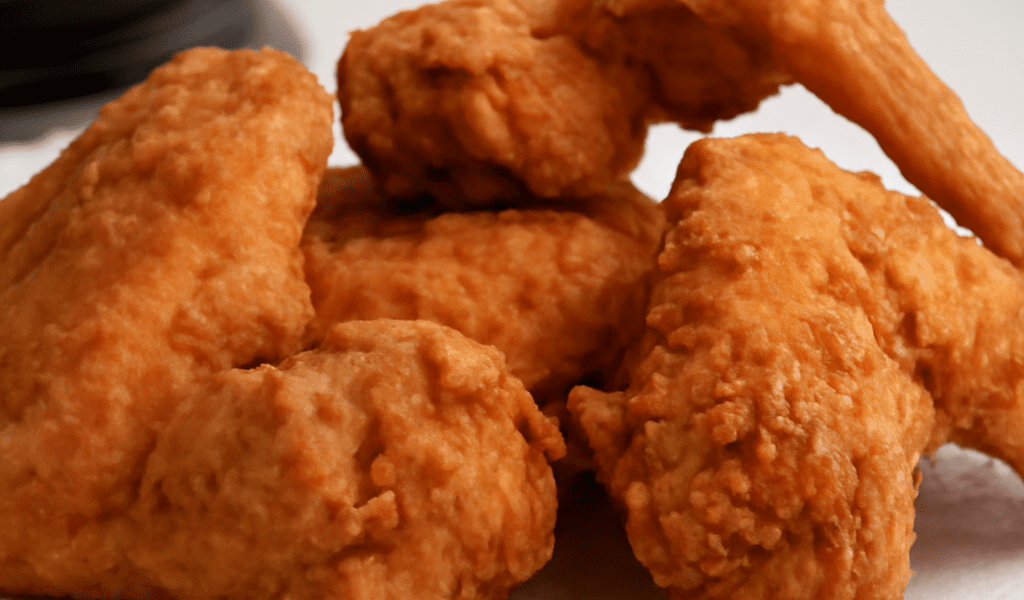
For crisp chicken wings with juicy centers, fry thawed wing pieces in 350°F oil for about 8 to 12 minutes, then check their internal temperature. The time needed to fry wings in deep oil varies with their size and the batch, so use a food thermometer to confirm they have reached 165°F.
You can cook wings in a deep fryer or a sturdy pot with a thermometer. Start with a small batch, give the oil time to recover between rounds, and add sauce after frying to keep the skin crisp.
Deep Fry Chicken Wings: A Practical Method
For about four servings, start with 2 pounds of thawed, split chicken wings: drumettes and flats. You’ll also need neutral frying oil, such as canola or peanut oil, plus salt and pepper. For a light coating, have 1/2 cup all-purpose flour ready; leave it out for unbreaded wings.
Use a heavy pot, oil and food thermometers, metal tongs or a slotted spoon, and a rack over a tray. Choose a pot large enough that the oil and chicken stay well below the rim. Follow your fryer’s fill line if using an electric model.
- Prepare the wings. Thaw frozen wings in the refrigerator, then pat them thoroughly dry with paper towels. Season with salt and pepper. If using flour, toss lightly and shake off the excess. Wash hands and surfaces that touched raw poultry.
- Heat the oil. Pour in enough oil to submerge a small batch while leaving plenty of space above it for bubbling. Heat to 350°F and monitor it throughout cooking. Keep the pot handle turned inward and never leave hot oil unattended.
- Lower in a batch. Gently place a few pieces in the oil using tongs or a basket. Leave room for the oil to circulate; do not fill the pot with chicken. Add pieces away from you to reduce splashes.
- Cook and check. Fry for approximately 8 to 12 minutes, turning as needed for even color. Remove a large piece to a clean plate and insert a food thermometer into the thickest part without touching bone. Check several pieces. The USDA requires a minimum of 165°F for poultry. If a piece is below that temperature, return it to the oil and check again.
- Drain and repeat. Lift the cooked wings onto the rack. Let the oil return to 350°F before adding the next batch. Season while hot, or toss with sauce just before serving.
When deciding how long to deep fry chicken wings, treat the clock as a guide. Large wings and a drop in oil temperature can extend deep-frying time. The thermometer reading is the decision point; golden skin alone cannot tell you whether the meat is cooked through.
Keep the Oil and Batch Under Control
To fry chicken wings evenly in deep oil, start with enough space between pieces that they can move without sticking together. In a small pot that may mean only four or five pieces at a time. If the temperature falls sharply and stays low, reduce the next batch and wait for the oil to recover. Crowding can make the coating greasy and slow the cooking.
How long wings take in a deep fryer also depends on how quickly the appliance restores its temperature. Check the oil after adding the wings and adjust the heat gradually. Avoid letting oil smoke; if it does, turn off the heat and allow it to cool before handling the pot.
Dry wings matter because water causes hot oil to sputter. Do not add icy or wet pieces. When deep-frying wings, lower them in gently rather than dropping them, and keep children and pets away from the stove. If oil catches fire, turn off the burner if safe and cover the pot with a metal lid; never pour water on a grease fire.
Choose a Coating and Sauce
Deep frying chicken wings without breading gives you crisp skin and a direct chicken flavor. Patting the pieces dry helps the surface brown. A light flour coating makes a slightly more substantial shell; shake away loose flour so it does not collect and burn in the oil.
If you are learning how to deep fry chicken wings with a thicker crust, use a seasoned flour coating, but avoid packing it on so heavily that it hides whether the outside is browning too quickly. Whichever approach you prefer, the time to deep-fry wings may change with their thickness. Frying time for chicken wings in deep oil is only a guide; check the meat, not just the coating.
The best fried chicken wings recipe is one that suits your preferred finish: serve the wings plain with salt, or toss them with a little Buffalo sauce immediately before eating. For another excellent fried chicken wings recipe, add garlic and pepper to the flour. For a crisp coating, offer sauce on the side. For a fully coated bite, use just enough sauce to cover the pieces and serve promptly.
Serve, Store, and Fix Problems
For a group, the best way to fry chicken wings is to work in batches and serve them promptly. Set out sauces and sides before you begin, and use a clean bowl for the finished food. Chicken wings fried in clean oil taste fresher than pieces cooked in oil full of scorched crumbs.
Once cooking is finished, switch off the heat and let the oil cool completely in the pot before straining or discarding it. Don’t pour it down the drain. If saving usable oil, strain out crumbs, place it in a covered container, and refrigerate it as USDA advises. Discard oil that smells rancid or has become dark and foamy.
The best deep fried chicken wings have browned skin and meat that reaches the safe temperature. If the outside turns dark before the center reaches 165°F, the oil is too hot or the pieces are too large for that cooking pace: lower the heat, finish cooking, and check again. If the coating is pale and greasy, let the oil return to 350°F and fry fewer pieces in the next batch.