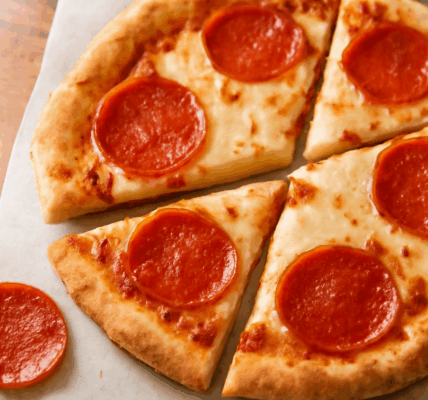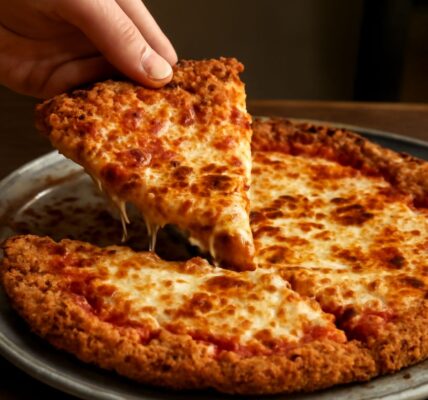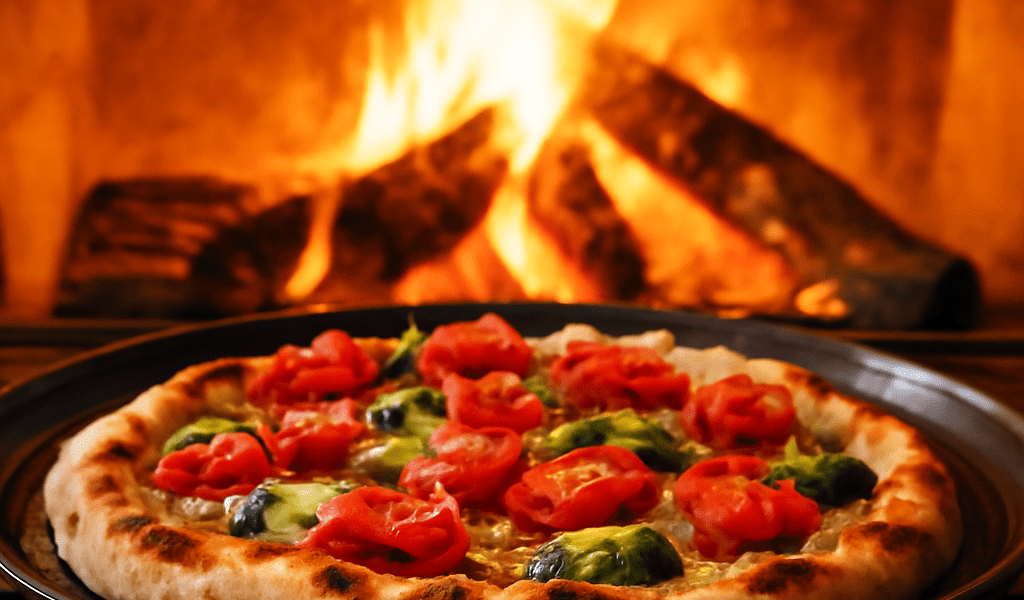
Expect a pizza with a quickly browned crust, soft interior, and possibly a few dark blisters when it comes from a hot wood-fired oven. The exact texture depends on the dough, temperature, and bake, so the menu’s description of the crust and toppings can tell you more about the meal than the oven alone.
Pizza baked in an oven heated by fire can range from tender and foldable to crisp and thin. If you like a particular texture, ask how the restaurant makes its pie before choosing a size or adding toppings.
Fire Oven Pizza: Heat, Time, and Texture
Wood fire pizza is cooked in an oven heated by burning wood. Heat stored in the oven floor cooks the base while heat from the dome and fire cooks the top. The cook moves or turns the pizza to manage its exposure to the hottest areas. A hot floor can brown the base quickly while the edge expands and develops spots of color.
A fire oven pizza may be cooked with wood or gas; ask about the fuel if that matters to your choice. The temperature is not identical in every oven or for every style. As one specific example, the Associazione Verace Pizza Napoletana describes a Neapolitan bake with a floor around 716–806°F and a dome around 905°F, taking 60 to 90 seconds. Those figures describe that method, not a promise that every wood-fired restaurant cooks at the same setting or speed.
A fast, hot bake can produce a rim that is blistered outside and tender inside, with a center thin enough to fold. Other doughs and longer bakes give a firmer or crisper result. For pizza baked in a wood-burning oven, if you prefer a rigid slice, look for a menu describing a thin, crisp base, or ask the server how the crust holds up when lifted.
What Wood and Browning Add to Flavor
A pizza from a wood-fired oven may have a subtle smoky aroma, toasted dough, and more intense flavor where the crust browns. The smoke level varies with the fire, airflow, and time in the oven. Some diners notice it strongly; others notice the toasted crust more than the smoke.
On a wood-fired pizza, dark spots can be pleasantly bitter and add contrast to sweet tomato and rich cheese. Extensive blackening tastes stronger, so ask about the restaurant’s usual bake if you prefer less char. A few scattered blisters do not mean the entire pizza will taste burnt, and a pale edge may simply reflect a different style or bake.
Wood fire pizza can make a simple topping combination appealing: tomato, mozzarella, and basil leave room to taste the crust. If you prefer bold flavors, sausage, roasted peppers, or mushrooms add their own character. Heavy toppings can make a thin center harder to hold, so consider a lighter combination when a foldable slice is important to you.
How to Read the Menu
For a pizza baked in a fire-heated oven, look first at the crust description. “Neapolitan-style” often points toward a soft center and raised edge; “thin and crispy” suggests a firmer base. Ask whether the pizza is served as an individual pie or is intended for sharing, since diameter and slice count vary.
Next, check the sauce and cheese. A white pizza may have no tomato sauce, while a red pie may use fresh mozzarella or a lower-moisture cheese. Fresh greens can be added after baking; cured meat or vegetables may be cooked on the pie. These details affect flavor and texture more directly than the fuel label.
If you are ordering pizza from a wood oven for a group, compare the listed diameter with the number of diners. A 12-inch circle has about 113 square inches of surface, while a 16-inch circle has about 201. That larger pie offers roughly 78% more area, although crust width and topping amounts vary. Divide the full price by the people sharing and account for sides before choosing.
A wood oven pizza may cost more than another menu item because of its size, toppings, preparation, or local pricing. Compare the actual offerings rather than assuming the oven explains the difference. Check whether additions are priced per pie and whether a dipping sauce or salad is included.
Dining In or Taking It Away
A pizza cooked over a wood fire is usually at its best for texture soon after baking: the base has less time to soften under sauce and steam. For takeout, travel time and packaging matter. If a soft center is expected, eat it with a fork and knife or fold a slice; if crispness matters most, choose a short trip and eat promptly.
For a pizza from a fire-heated oven, ask how the restaurant packs it and whether wet toppings or sauces can travel separately. Avoid sealing a steaming hot pie inside an additional bag for the journey, since trapped moisture can soften the crust. Letting it cool slightly before closing a container at home also helps limit condensation.
Leftovers belong in the refrigerator within two hours, or one hour if the surrounding temperature is above 90°F. Reheat leftovers to 165°F, following USDA guidance. A skillet or oven can restore some crispness; a microwave is convenient but tends to leave the crust softer.
Choose wood fire pizza with a lightly topped, soft-centered crust when you want to taste the dough and enjoy a foldable slice. Choose a menu option described as thin and crisp, with a bake level you like, when a firmer base matters more. For a group, use the listed size and total price to decide how many pies to order.