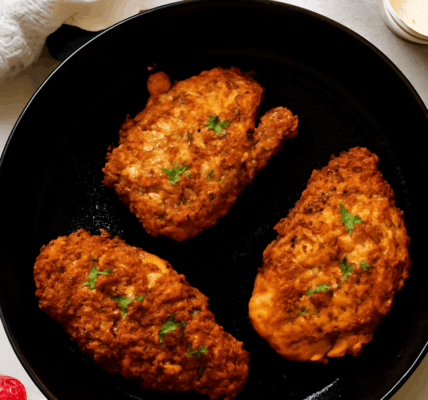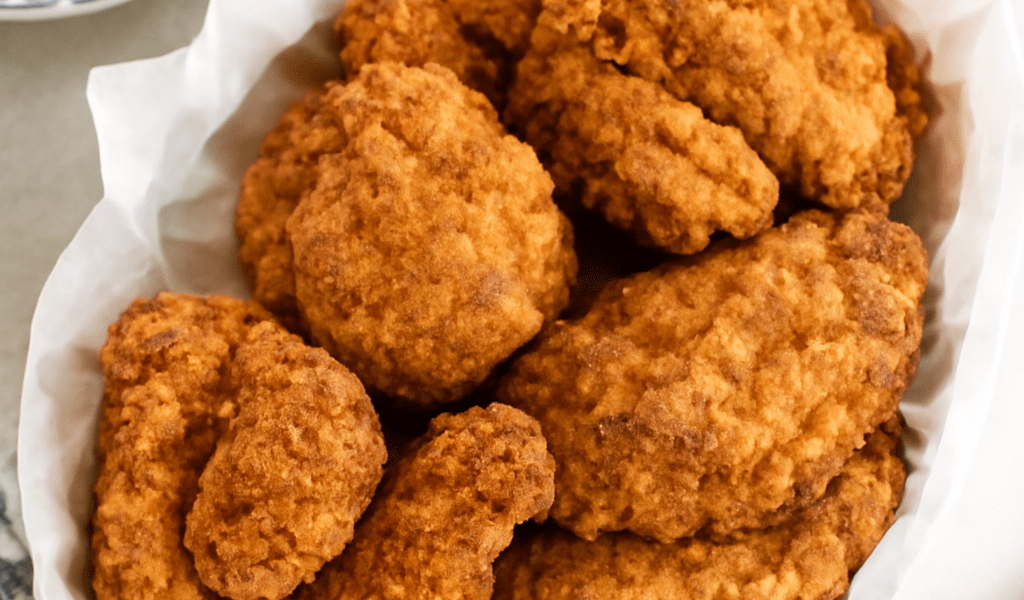
The thickness of the crust depends on how many times you coat the chicken and how much mixture stays on each pass. Twice-battered chicken gets two measured rounds of coating; a third round builds a heavier shell and takes more care to cook evenly.
For a twice-dipped fried chicken dinner, use flour and seasoned buttermilk in alternating layers, then let the coating settle before frying. The result is a crunchy exterior around juicy boneless pieces.
Ingredients for Four Servings
- 1 1/2 pounds boneless, skinless chicken thighs, cut into 8 similarly sized pieces
- 1 1/2 cups all-purpose flour
- 1/4 cup cornstarch
- 1 1/2 teaspoons kosher salt, divided
- 1 teaspoon paprika
- 1/2 teaspoon garlic powder
- 1/2 teaspoon black pepper
- 1 cup buttermilk
- 1 large egg
- About 4 cups neutral frying oil, such as canola, or enough for 1 inch in your pan
Choose a deep, heavy pan and an oil thermometer. You will also need an instant-read food thermometer, tongs, two shallow bowls, and a wire rack set over a rimmed tray. Keep a clean plate or rack ready for the cooked pieces. Leave several inches above the oil for bubbling.
Double Dipped Fried Chicken: The Method
- Mix the flour, cornstarch, 1 teaspoon salt, paprika, garlic powder, and pepper in one bowl. In the second bowl, whisk the buttermilk, egg, and remaining 1/2 teaspoon salt.
- Pat the chicken dry with paper towels. For each piece, dip in the buttermilk mixture, let the excess drip off, and press into the flour mixture. Shake off loose flour. Repeat the wet dip and flour coating once: that is two wet dips and two flour coats. Set each piece on a tray as you work.
- Rest the coated pieces in the refrigerator for 15 minutes. This gives the flour time to hydrate and adhere.
- Pour oil into the pan to a depth of about 1 inch and heat to 350°F. Carefully lower in enough pieces to fit without crowding, placing them away from you. Fry in batches, turning occasionally, and adjust the heat to keep the oil roughly between 325°F and 350°F. Boneless pieces may take about 8 to 12 minutes, depending on their size.
- Check each piece with a food thermometer inserted into its thickest part. The USDA recommends a minimum internal temperature of 165°F for poultry. If a piece is below that temperature, continue cooking and check again. Move finished pieces to the clean rack. Return the oil to 350°F before adding the next batch.
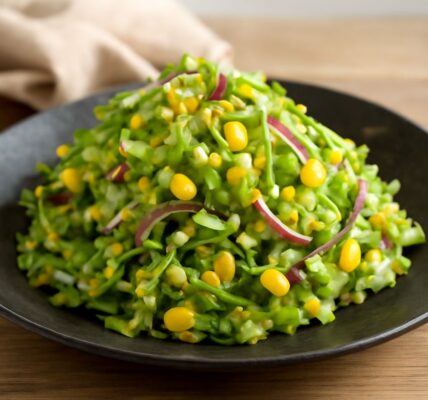
Double battered fried chicken should have a deeply golden, textured coating. Color tells you about the crust; the thermometer tells you whether the center has reached the required temperature. If the outside darkens too quickly, lower the heat and monitor the oil before continuing. Double dipped fried chicken also pairs well with a simple salad.
Two Coats or Three?
Double dipped fried chicken uses two trips through the wet mixture and two through the seasoned flour: wet, flour, wet, flour. Each pass gives twice-dipped chicken a thin layer. Press gently into the flour and shake off excess after each coat; a thick blanket of dry flour can turn pasty instead of crisp.
For triple dipped fried chicken, add a third wet dip and a third flour coat after the second flour coat: wet, flour, wet, flour, wet, flour. Let the excess drip and shake off loose flour each time. The extra round produces a thicker, rougher crust. Plan on a longer cooking time if needed, and check the center of every piece with the thermometer. If making the three-dip chicken version alongside the two-round batch, keep the pieces separate so you can compare their textures.
A three-dip chicken coating suits someone who wants a substantial crunch and doesn’t mind using more flour and buttermilk. The two-layer coating gives the chicken more balance between crust and meat. If you choose three rounds, mix extra coating in clean bowls before starting; do not add unused ingredients back to a package after they have touched raw poultry.
How to Get the Crust Right
Resting twice-battered chicken briefly in the refrigerator helps the flour absorb moisture from the wet mixture. When the coating looks damp rather than powdery, it is ready for the oil. A few small clumps in the seasoned flour are welcome: press them lightly onto the surface for extra craggy bits.
For twice-dipped chicken with an even crust, use pieces of similar thickness and give each one room in the pan. Crowding lowers the oil temperature and makes the twice-coated pieces harder to turn. For the double-dipped batch, let vigorous bubbling settle before adding more pieces.
For chicken with two coats, heat the oil before the first batch. An oil thermometer makes the temperature visible throughout cooking; use the separate food thermometer to check the meat. Lower the chicken in gently with long tongs, keep the pan handle turned inward, and never leave hot oil unattended. If oil catches fire, turn off the heat if safe and cover the pan with a metal lid; never pour water on it.
Keep Prep and Serving Simple
Wash hands with soap and water after handling raw poultry, and wash the bowls, tongs, work surface, and tray that touched it. Discard the remaining wet mixture and flour after coating. Use clean tongs and a clean rack for cooked food, so raw juices do not touch the finished pieces.
For twice-battered chicken with a milder flavor, leave out the pepper and use sweet paprika. For twice-dipped chicken with more heat, add a pinch of cayenne to the flour. The three-dip chicken version needs extra mixture to cover its additional pass; make it before the raw pieces go into the bowls. Serve the double-coated chicken with slaw or pickles.
Let double battered fried chicken drain on a wire rack with space between pieces, then serve promptly; the airflow keeps steam from softening the underside.