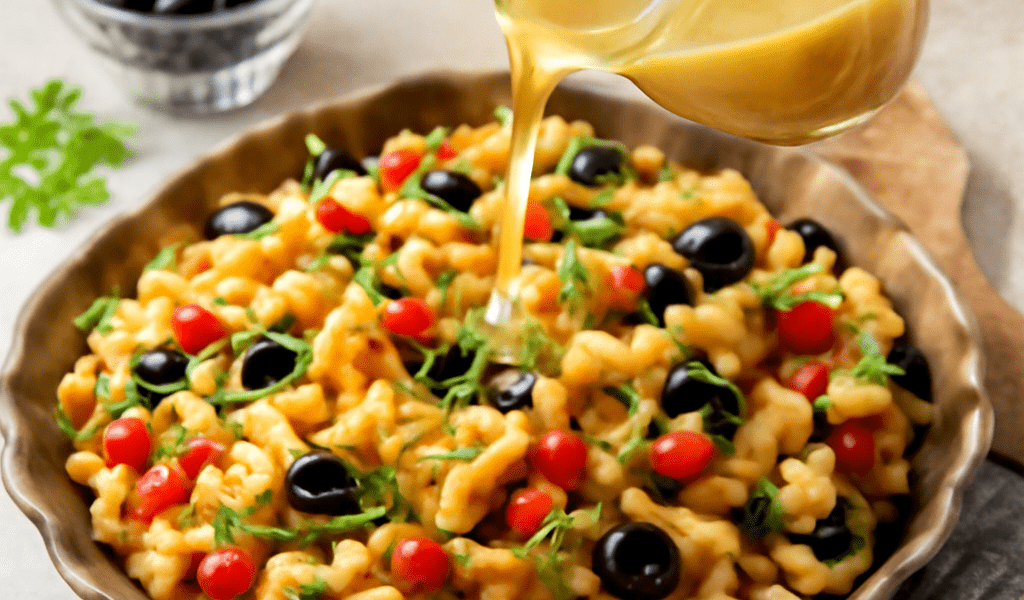
Make a colorful meat-free pasta salad with crisp cucumber, sweet tomatoes, and tender roasted zucchini. A lemon dressing coats the short pasta and vegetables without hiding their flavor, giving you a satisfying lunch or a generous side for a shared meal.
This vegetable-packed pasta salad combines fresh and cooked produce for contrast. Make it ahead, keep it chilled, and add a little extra dressing before serving if the pasta has absorbed it.
Vegetable Pasta Salad: Ingredients and Method
This vegetarian pasta salad recipe makes about six side servings or four lighter lunches. Allow roughly 30 minutes, including roasting and cooling. Choose products labeled vegetarian where available, and check the ingredient lists as described below.
For the salad:
- 8 ounces dry rotini or other short pasta
- 1 medium zucchini, cut into 1/2-inch pieces
- 1 red bell pepper, cut into 1/2-inch pieces
- 1 tablespoon olive oil for roasting
- 1 cup cherry tomatoes, halved
- 1 cup diced cucumber
- 1/4 cup finely chopped red onion
- 1 can (15 ounces) chickpeas, drained and rinsed
- 1/4 cup chopped parsley
- 1/2 cup crumbled vegetarian feta-style cheese, optional
For the dressing, whisk together 3 tablespoons olive oil, 2 tablespoons lemon juice, 1 teaspoon Dijon mustard, 1 small minced garlic clove, 1/2 teaspoon salt, and black pepper to taste.
- Roast the vegetables. Heat the oven to 425°F. Toss the zucchini and pepper with 1 tablespoon oil on a sheet pan, spread them out, and roast for 15 to 20 minutes, turning once, until tender and lightly browned. Let them cool.
- Cook the pasta. Boil it in salted water according to the package until just tender. Drain and rinse briefly under cold water to stop the cooking. Drain well so excess water does not dilute the dressing.
- Mix the dressing. Whisk the lemon juice, mustard, garlic, salt, and pepper with the olive oil. Taste: it should be bright and slightly assertive, since it will season the whole bowl.
- Assemble. Toss the cooled pasta with the roasted vegetables, tomatoes, cucumber, onion, chickpeas, and parsley. Add most of the dressing and mix. Fold in the optional cheese.
- Taste and serve. Add the remaining dressing as needed. Serve chilled or shortly after mixing, and refrigerate leftovers promptly.
This vegetarian pasta salad balances about as much produce as pasta by volume, with chickpeas adding substance. For larger appetites, add bread or divide it into fewer portions. Beans and pasta can cost less per serving than individual prepared salads.
Choose Pasta That Holds the Dressing
Rotini catches dressing in its spirals, while penne and bow ties have folds or openings that hold small pieces of vegetables. Choose a shape close in size to the produce for mixed forkfuls. Whole-wheat pasta works too, though its firmer flavor changes the balance; follow the package cooking time.
For a vegetarian salad with pasta, cook the noodles just until tender rather than soft. Pasta firms as it cools, so taste a piece before draining: it should be pleasant to bite without a hard center. A brief rinse cools it and removes surface starch; thorough draining keeps the lemon dressing concentrated.
Mix Raw and Cooked Vegetables
A pasta salad with vegetables benefits from different textures. In a vegetable pasta salad, mix cooked and raw produce. Tomatoes bring juiciness, cucumber adds crunch, and roasted zucchini and pepper lend sweetness. Cut the cooked pieces evenly so they finish together; spread them in one layer so they brown instead of steaming.
For a vegetable-rich pasta salad, replace zucchini with roasted broccoli or use thawed peas for a quick addition. Raw carrots, chopped small, add crunch; cooked green beans contribute a tender bite. Keep the total amount similar to the recipe, and cool cooked additions before mixing so they do not soften the fresh vegetables.
A recipe for meat-free pasta salad can use what you have. If using watery vegetables, drain them well. If raw onion tastes too sharp, soak the chopped pieces briefly in cold water and drain, or use a smaller amount. The goal is a balanced mix of flavors.
Check Labels and Adjust the Dressing
The pasta vegetable salad can be served without cheese. If you add it, check for microbial or plant-based enzymes, or a vegetarian label: cheese made with animal rennet is unsuitable for many vegetarians. If the label only says “enzymes” and the source is unclear, choose a clearly labeled alternative or ask the manufacturer.
Check packaged dressing or mustard as well. Some dressings contain anchovies, and some ingredients or flavorings vary by brand. The lemon dressing above is straightforward to assemble, and omitting the optional cheese makes the dish suitable for people avoiding dairy; confirm the pasta and mustard meet their needs too.
A vegetable and pasta salad can take a sharper dressing than a warm pasta dish because chilled food tastes less aromatic. Add lemon gradually, then balance it with oil and salt. Reserve a little dressing separately if making the bowl ahead; stir it in after chilling to loosen the pasta and refresh its flavor.
Pack and Store Safely
This recipe for a vegetarian pasta-and-vegetable salad suits lunch boxes: pack it in a sealed container with an ice pack, and keep the cheese separate if you prefer to add it at serving time. For a pasta salad full of vegetables that will sit on a buffet, place a smaller serving bowl over ice and replenish it from the refrigerator.
Refrigerate the salad at 40°F or below within two hours of preparation, or within one hour when the surrounding temperature is above 90°F. FoodSafety.gov lists three to four days for refrigerated macaroni salads. Keep the bowl covered and use clean utensils when serving; if it has been left out beyond the safe time, discard it.
If your meatless pasta salad seems dry after chilling, toss in the reserved dressing or a little olive oil and lemon juice. If it tastes watery, drain the vegetables more thoroughly next time and dry the pasta well before mixing. Add cucumber just before serving when its crispness matters most.