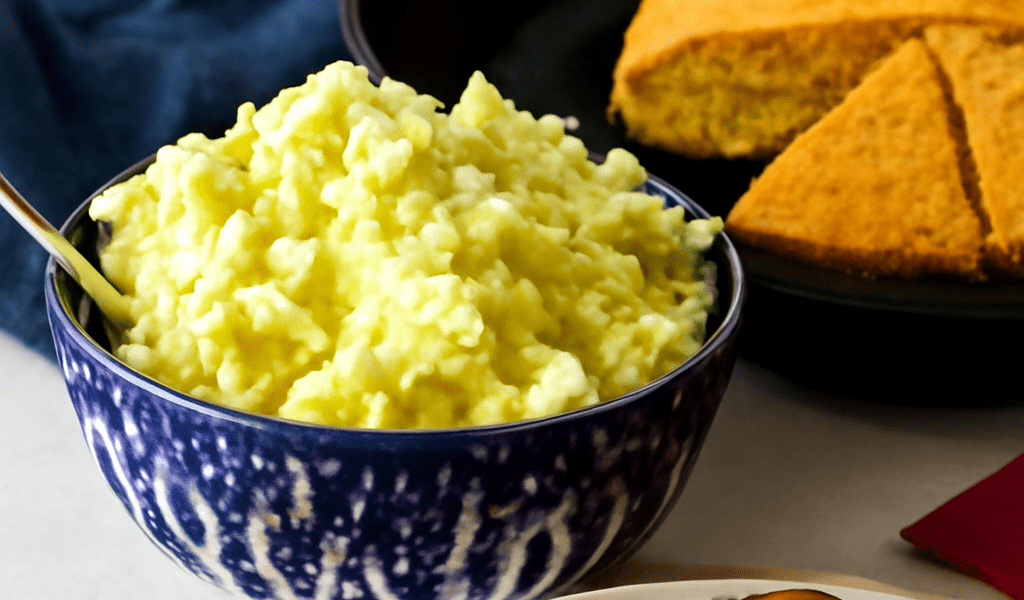
Plan on 25 pounds of finished potato salad for a hundred guests when it is one of several sides. That allows 4 ounces per person: 100 × 4 ounces = 400 ounces, or 25 pounds. Use the calculation for potato salad for a group of 100 as a planning estimate, then adjust for the rest of the menu and how generously you intend to serve.
Potato Salad for 100: Choose a Portion Size
The most useful answer to how much potato salad for 100 depends on the meal. Four ounces by weight per guest is a sensible middle estimate for a buffet with other sides. It is not the same as four fluid ounces in a measuring cup: a kitchen scale gives the clearest way to portion a recipe or compare a caterer’s package.
| Finished salad per guest | Calculation for 100 | Finished salad to plan |
|---|---|---|
| 3 ounces | 100 × 3 ÷ 16 | 18.75 pounds |
| 4 ounces | 100 × 4 ÷ 16 | 25 pounds |
| 5 ounces | 100 × 5 ÷ 16 | 31.25 pounds |
Use the smaller portion when several substantial sides are available and guests will probably sample more than one. Choose 5 ounces when the salad is a prominent side, the meal is long, or you expect generous helpings. If you need a reserve, add about 10% to the selected target. For a hundred guests, the finished potato salad increases from 25 to 27.5 pounds. This is a planning choice, so balance the extra against your budget and cold-storage space.
Finished Salad and Potatoes Are Different Weights
When asking how many pounds of potato salad for 100, count the completed dish, including dressing, vegetables, eggs, and other additions. A 25-pound order means 25 pounds ready to serve; it does not mean you need 25 pounds of raw potatoes. Recipes vary in both the proportion of potatoes and the weight lost during preparation. The number of pounds of potato salad needed for a hundred guests remains the same whether the dish is homemade or purchased; only the purchasing calculation changes.
For a concrete purchasing estimate, suppose potatoes make up 75% of the finished salad by weight and your peeled, cooked potatoes retain 85% of their raw purchased weight. For a 25-pound target, the math is:
- 25 pounds finished salad × 0.75 = 18.75 pounds cooked potato.
- 18.75 ÷ 0.85 = about 22.1 pounds raw potatoes to buy.
- The remaining 6.25 pounds of the finished salad comes from dressing and other ingredients.
These are example yields, not fixed properties of every recipe. Peeling thickness, trimming, cooking, and the amount of dressing change the result. If you retain the skins or use a particularly creamy recipe, your purchase may differ. Weigh a small batch of raw potatoes and the cooked, prepared potatoes to establish your own yield before scaling up.
For instance, if 5 pounds raw becomes 4.5 pounds ready for mixing, the yield is 4.5 ÷ 5, or 90%. At the same 75% potato share and 25-pound target, you would need about 20.8 pounds raw: 18.75 ÷ 0.90. Weigh the finished test batch too, so you can see whether its dressing and vegetables actually make up the remaining quarter.
Adjust for the People and Menu
Consider how much potato salad for 100 you need alongside the whole meal. A cookout with burgers, baked beans, slaw, and chips may support a smaller scoop than a simple meal with one main and only one side. If guests serve themselves, place a 4-ounce portion on a plate beforehand to decide whether it looks right; weigh it, since a mound’s volume depends on the cut of the potatoes.
When estimating how many pounds of potato salad for 100 at an event with children or a mix of appetites, use your expected serving size rather than assuming every guest eats exactly the average. The total pounds of potato salad for a hundred people are a budget and preparation target, not a promise that each person will take a scoop. Ask the caterer whether its quoted weight is the finished, dressed salad and whether serving utensils and delivery are included.
If only 80 of the 100 guests are expected to take the salad, multiply 80 by the chosen portion. At 4 ounces each that is 320 ounces, or 20 pounds. This smaller estimate depends on knowing your group; a broadly advertised buffet with unknown preferences may call for the full 100 portions and a reserve.
Make and Serve It in Batches
Divide a large order into manageable batches. For 25 pounds, five 5-pound containers are easier to mix, chill, transport, and replace on a buffet than one deep tub. Weigh each finished batch and label it with the preparation date. Cool cooked ingredients promptly in shallow containers, then mix with chilled dressing and keep the finished salad refrigerated.
Keep food at 40°F or colder, using a refrigerator or a cooler with sufficient ice or cold packs. Put out a small chilled bowl at a time, set it in ice, and check its temperature with a food thermometer; replenish it with a fresh cold bowl instead of adding new salad to a bowl that has warmed. FoodSafety.gov advises discarding perishable food left out for more than two hours, or one hour when exposed to temperatures above 90°F. Count total time out during preparation, transport, and service if it is not kept cold.
Quick Planning Checklist
- Set the weight of potato salad per 100 guests: 18.75, 25, or 31.25 pounds for 3-, 4-, or 5-ounce portions.
- Add a reserve if needed; a 10% buffer brings the middle estimate to 27.5 pounds.
- For homemade salad, estimate raw potato weight from your own recipe’s potato share and measured yield.
- Divide the salad into shallow, labeled batches and keep it at 40°F or below through service.